
AI Integration in Business: Smart Move or Overhyped Trend?
Discover how AI integration services can transform your operations - and where things might go wrong.
By Felipe Bongiolo, WDF
Artificial Intelligence (AI) isn’t just for tech giants anymore. From local retailers to mid-sized manufacturers, businesses across industries are exploring AI automation and integration services to stay competitive. But is it worth the investment? And how do you avoid common pitfalls?

AI tools helping a business team analyze real-time data (AI Generated Image)
Why Businesses Are Rushing to Adopt AI
According to recent studies, over 50% of B2B leads now originate from organic search - and content about AI solutions ranks highly. Companies that integrate AI thoughtfully see real gains:
- Automated workflows: Routine tasks like data entry, customer support (via chatbots), and inventory tracking can run 24/7 with minimal human oversight.
- Smarter decisions: AI analyzes vast datasets to uncover trends humans might miss - from predicting customer churn to optimizing supply chains.
- Personalized customer experiences: Recommendation engines and dynamic pricing boost engagement and sales.
- Cost savings: McKinsey estimates AI can reduce operational costs by up to 25% in some sectors.
The Flip Side: Risks and Challenges
Despite the hype, AI integration isn’t a magic fix. Many businesses stumble during implementation:
- High upfront costs: Custom AI solutions require investment in infrastructure, talent, and training.
- Data quality issues: “Garbage in, garbage out.” Poor or biased data leads to flawed AI decisions.
- Integration complexity: Legacy systems often don’t play well with modern AI tools without significant refactoring.
- Ethical & compliance risks: AI must comply with regulations like GDPR - especially when handling customer data.
“AI won’t replace your business - but a competitor using AI might.”
- Industry adage
Is AI Right for Your Industry?
The answer depends on your goals. For example:
- Healthcare: AI aids in diagnostics and patient scheduling.
- Retail: Dynamic pricing and inventory forecasting reduce waste.
- Manufacturing: Predictive maintenance cuts downtime.
- Finance: Fraud detection and risk modeling improve security.
If you’re considering custom operations software development, AI integration should be part of the conversation - but only if aligned with clear business outcomes.
Getting Started the Right Way
Don’t jump in blind. Start with:
- Audit your data: Ensure it’s clean, structured, and sufficient.
- Define clear use cases: Solve one problem well before scaling.
- Partner with experts: Work with a team experienced in AI automation wired into your existing tools who understand your industry.
- Measure ROI: Track performance before and after implementation.
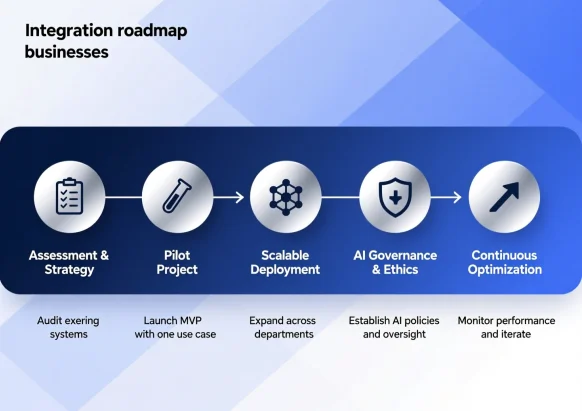
A practical roadmap for AI adoption in SMEs
Final Thoughts
AI integration in business isn’t about chasing trends - it’s about solving real problems with smart technology. When done right, it drives efficiency, innovation, and growth. When rushed, it becomes an expensive distraction.
Ready to explore how AI can work for your business? We specialize in custom AI solutions tailored to your industry - no buzzwords, just results. See how our AI automation service works or book a free consultation.
How WDF does this in practice
This is work we do for clients every week. Here is what that looks like as a service:
