Custom Robotics Software for Warehouse Automation: Beyond Off-the-Shelf AMRs
Why the future of logistics isn’t just about robots - it’s about intelligent, adaptable software that fits your operation.
By Felipe Bongiolo, WDF
Autonomous Mobile Robots (AMRs) are everywhere in modern warehouses. But here’s the truth: **the robot is just the body - the software is the brain**. And off-the-shelf AMR platforms often come with rigid logic that doesn’t match your picking routes, inventory system, or peak-season demands.
That’s why forward-thinking logistics providers and e-commerce fulfillment centers are investing in custom robotics software for warehouse automation - built to integrate seamlessly with their existing WMS, ERP, and human workflows.
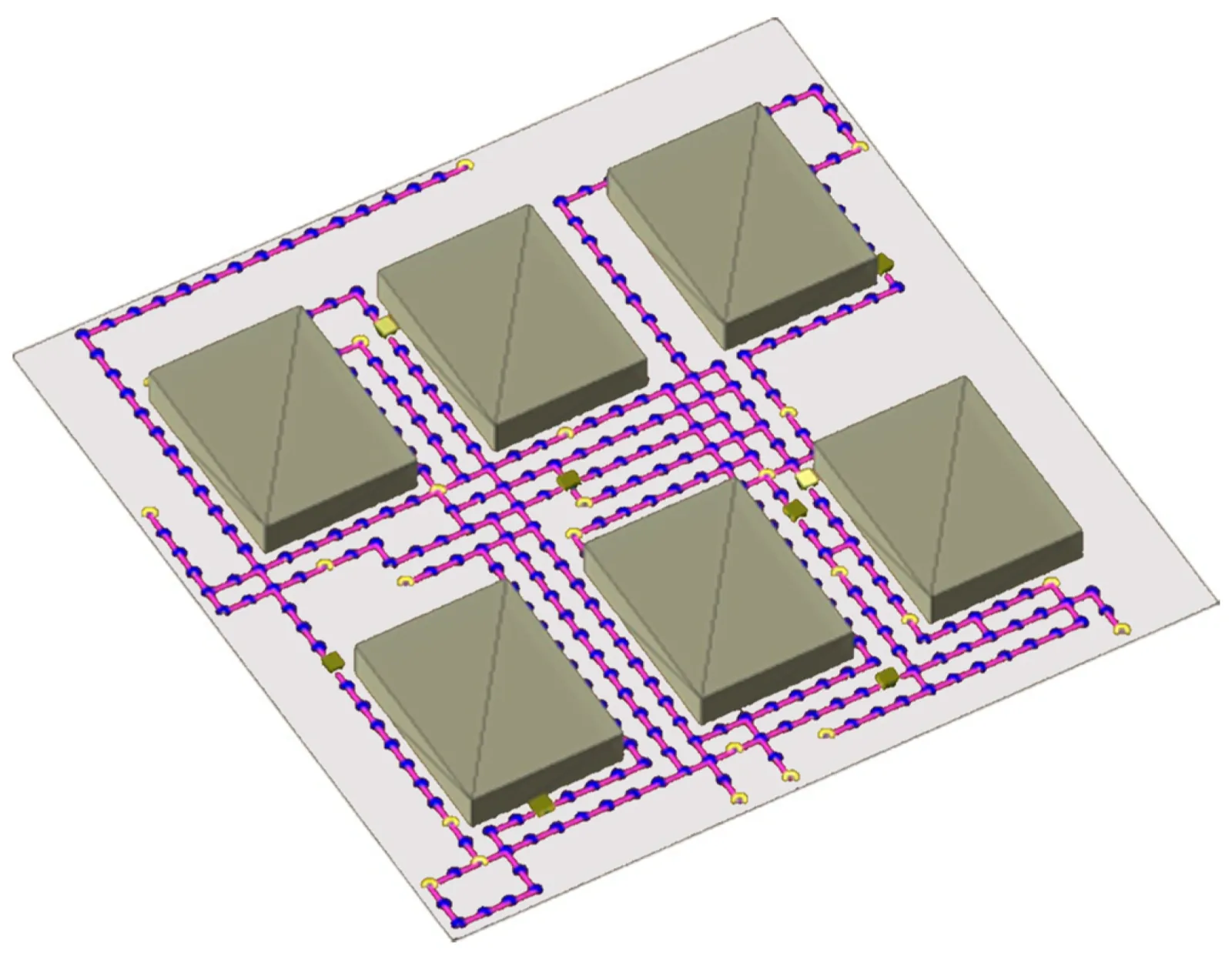
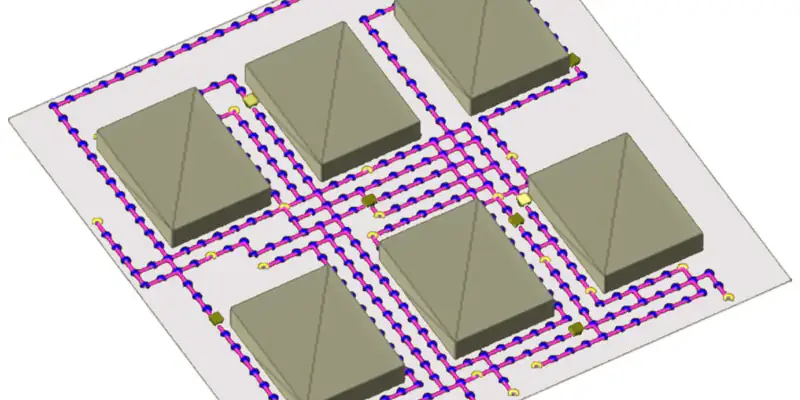
AMRs guided by custom software that understands real-time warehouse dynamics
ref: Fourie, Bradley, et al. “Development of a Dynamic Path Planning System for Autonomous Mobile Robots Using a Multi-Agent System Approach.” Sensors, vol. 25, no. 17, 27 Aug. 2025, p. 5317, https://doi.org/10.3390/s25175317. Accessed 23 Oct. 2025.
The Limits of “Plug-and-Play” AMR Platforms
Many vendors sell AMRs with pre-built fleet management software. Sounds convenient - until you hit real-world complexity:
- Fixed routing logic: Can’t adapt to temporary obstacles, high-priority orders, or zone congestion.
- Poor WMS integration: Requires manual data syncs or middleware that breaks during updates.
- No support for hybrid workflows: Struggles when humans and robots share the same picking zones.
- Scalability ceilings: Adding 50+ robots often crashes the system or requires costly vendor upgrades.
The last one has a standards answer that is worth knowing before you sign anything. VDA 5050 defines a common interface between AGVs and AMRs and a master control system, precisely so that a fleet does not have to come from one vendor. If your prospective supplier does not support it, you are buying a single-vendor fleet whether or not anyone says so - and the cost of that shows up the first time you want to add a different robot.
What Custom Robotics Software Delivers
When you build software tailored to your warehouse, you gain:
- Dynamic task allocation: AI-driven prioritization based on order SLAs, robot battery levels, and traffic.
- Deep WMS/ERP integration: Real-time sync with SAP, Oracle, NetSuite, or your legacy system via secure APIs.
- Human-robot collaboration (HRC): Safe, efficient co-working zones with visual alerts and adaptive pathing.
- Modular architecture: Start with goods-to-person picking, then add sortation, packing, or yard management later.
- Predictive maintenance: Monitor robot health to avoid downtime during peak seasons.
“After switching to custom fleet software, we reduced order fulfillment time by 35% and scaled to 120 robots without adding IT staff.”
- Operations Director, National E-Commerce Fulfillment Center
Real Use Cases Across Industries
Custom robotics software isn’t just for Amazon-scale operations:
- Retail distribution centers: Handle seasonal spikes with elastic robot tasking.
- Pharmaceutical warehouses: Enforce strict chain-of-custody tracking with audit-ready logs.
- 3PL providers: Offer white-labeled automation to clients with configurable workflows.
- Manufacturing plants: Automate just-in-time part delivery to assembly lines.
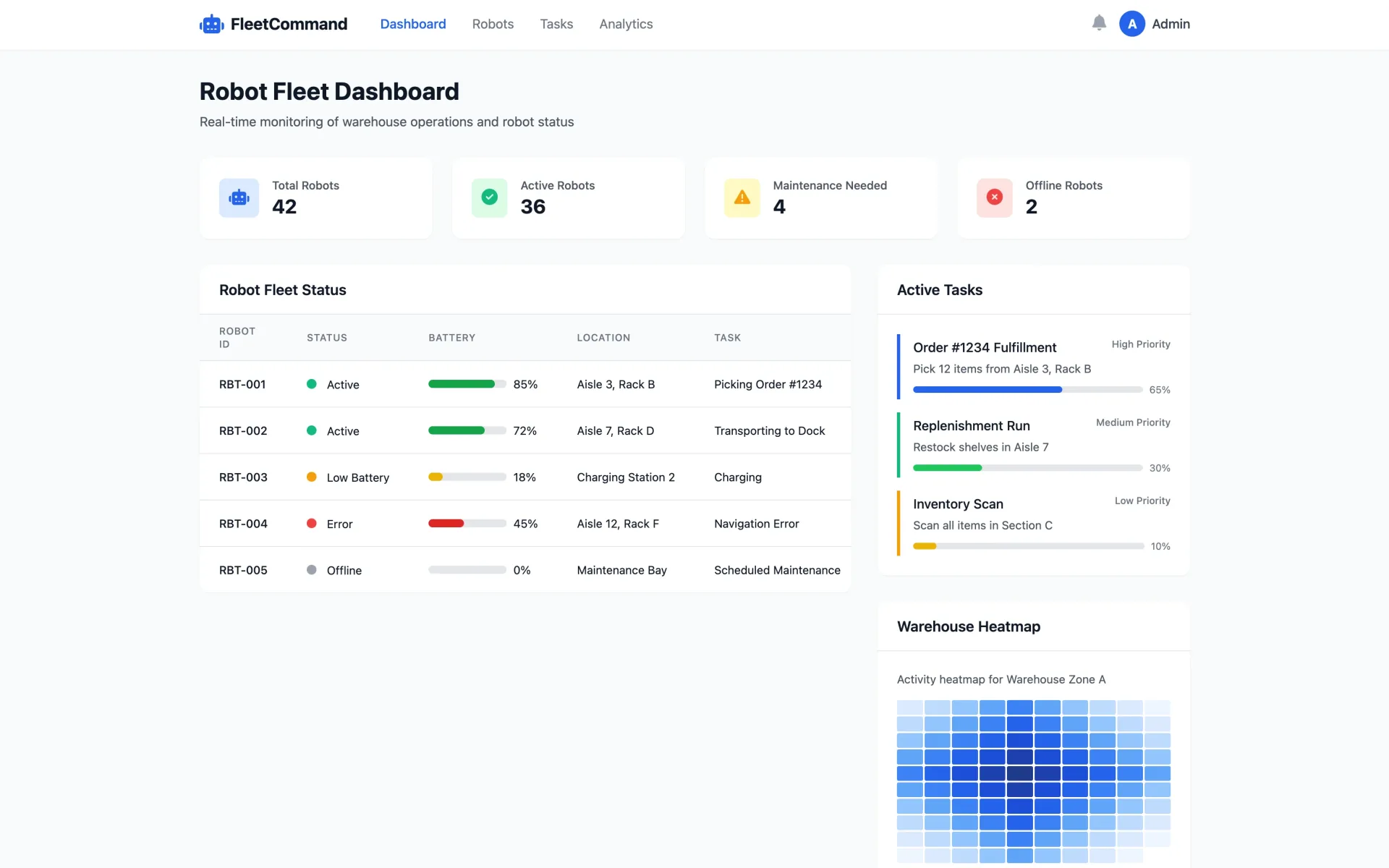
A live operations dashboard we built for warehouse supervisors
How to Get Started (Without Starting from Scratch)
You don’t need to build everything in-house. The smart approach:
- Audit your pain points: Where do bottlenecks occur? What systems need to talk?
- Leverage open robotics frameworks: Use ROS 2 or similar as a foundation (we handle the rest).
- Integrate incrementally: Pilot with 5–10 robots before full rollout.
- Choose a dev partner with industrial experience: Look for teams who’ve worked with AMRs, LiDAR, and warehouse safety protocols.
Our robotics and AMR integration engineering covers exactly this - fleet orchestration, human-robot interfaces, and the WMS and ERP integrations that sit between them. We help you get more out of the AMRs you already own, or build the control layer from day one if you are starting fresh.
Final Thought
Robots are transforming warehouses - but software transforms how those robots work. The real competitive edge isn’t in buying more robots. It’s in making every robot smarter, safer, and more aligned with your business goals.
Ready to unlock the full potential of your automation investment? Explore our warehouse robotics integration services, or book a technical consultation.
How WDF does this in practice
This is work we do for clients every week. Here is what that looks like as a service:
